
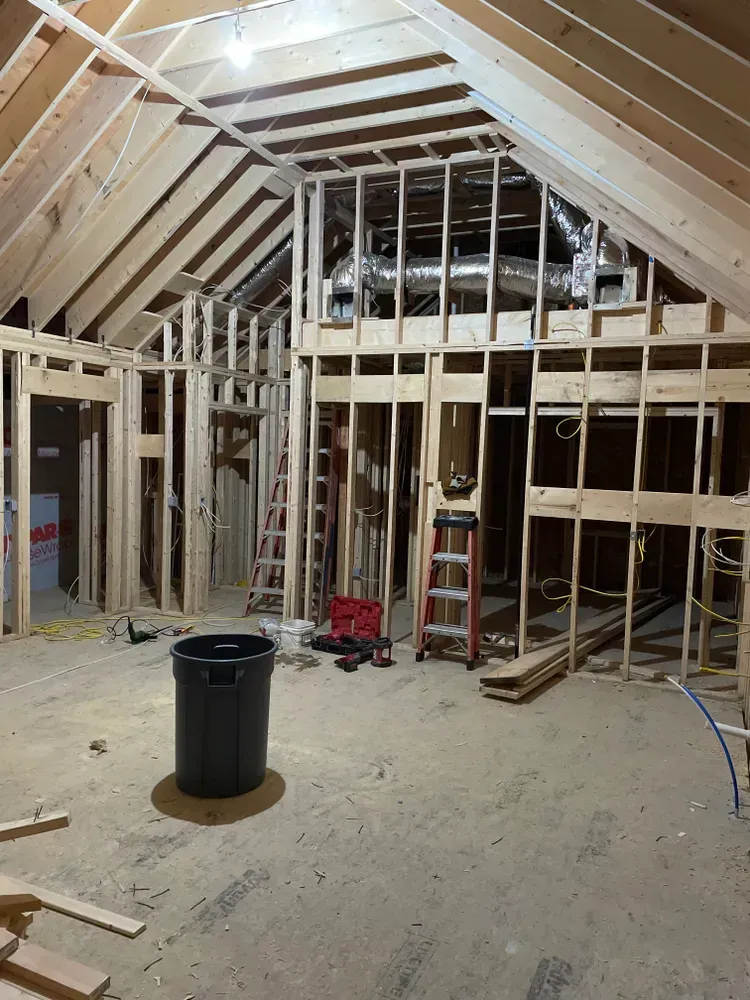
Structural and Finish Work Built to Specification
Skilled carpentry services on the South Shore for renovations, additions, and new construction projects.
You need framing that holds square under load, trim that fits tight at every joint, and cabinetry that closes the same way six months from now as it does the day it goes in. Carpentry work in Pembroke homes includes both structural tasks like building walls and installing floor systems, and finish work like hanging doors, installing baseboards, and fitting custom millwork. AP Design Build Inc. handles carpentry as part of larger design and build projects, where precision at each stage affects everything that follows.
The carpentry services cover framing for additions and renovations, installation of stairs and railings, trim carpentry, custom built-ins, and finish details that complete a space. The work integrates with remodeling timelines and construction management oversight to keep every phase moving without gaps or rework. Whether the job involves rough framing a new room in Pembroke or installing crown molding in a finished kitchen, the team works from plans and measurements that account for settling, material movement, and long-term stability. Every carpenter is licensed and insured, and the crew serves homes throughout Pembroke, Norwell, Duxbury, Hingham, Hanover, and Cohasset.
If your project requires carpentry work that meets building codes and holds up under daily use, contact AP Design Build Inc. in Pembroke for a free estimate and guidance on what the scope involves.
How Structural and Finish Carpentry Work Together
Structural carpentry comes first and includes framing walls, installing floor joists, building roof structures, and setting beams or headers that carry weight. In Pembroke, that often means working around existing framing in older homes, sistering joists that have sagged, or building new walls to support an addition. The team uses engineered lumber where spans require it and ties new framing into existing structures with code-compliant fasteners and flashing.
Once the rough framing passes inspection, finish carpentry begins. You will see door jambs hung level, baseboards scribed to uneven floors, and trim joints coped or mitered to close without gaps. Cabinets get shimmed and screwed into studs, not just drywall. Stairs are built with consistent riser height and secure handrails. When the carpentry is done right, doors do not swing open on their own, drawers do not bind, and trim stays tight even as the house shifts through seasonal temperature swings.
Custom carpentry requests might include built-in bookshelves, window seats, closet systems, or paneling. The scope depends on the overall project and whether the design calls for stock materials or custom millwork. The estimate will clarify what fits within the timeline and what requires additional planning or fabrication time.
Most people want to know the details first
Homeowners often ask about material choices, project timing, and how carpentry work coordinates with other trades. These questions come up regularly during the planning and estimate stages.
AP Design Build Inc. offers free estimates for carpentry work tied to renovations, additions, and new builds in Pembroke and nearby towns. If your project needs framing that meets code or finish work that fits without gaps, contact the team to discuss your timeline and specifications.